Grantee: Gjore Nakov
Host mentor: Alberta Tahiri
Location: Peja, Kosovo
STSM period: 15 July – 15 August 2026
COST Action: CA24170 – SMART-RURAL
From 15 July to 15 August 2026, a Short-Term Scientific Mission (STSM) was conducted in Peja, Kosovo, within COST Action CA24170 – SMART-RURAL, in collaboration with the host mentor Alberta Tahiri.
The STSM focused on exploring the role of cultural heritage in sustainable tourism development in the Peja region. The mission combined field research, questionnaire-based data collection, and direct observation of the local tourism context.
Peja provides an interesting setting for this research because cultural and natural tourism resources are closely connected, while their sustainable utilization can contribute to local and regional tourism development.
What was done during the STSM?
A structured questionnaire was developed as the main research instrument to collect first-hand information about perceptions, challenges, opportunities, and expectations related to cultural heritage and sustainable tourism.
To facilitate participation from different groups of respondents, the questionnaire was prepared in three languages: Albanian, Bosnian, and English. Data were collected using both printed questionnaires and Microsoft Forms. The field survey was conducted during the summer tourist season, when tourism activity in Peja is particularly high. In total, 158 valid responses were collected during the STSM.
The questionnaire addressed several important issues, including:
- challenges facing cultural tourism in Peja;
- opportunities for improving sustainable tourism;
- ways in which local authorities could better promote cultural heritage;
- cultural practices and heritage sites that may be underutilized for tourism; and
- suggestions for improving cultural heritage and sustainable tourism.
The fieldwork also included direct observation of the local tourism context, with particular attention to the relationship between cultural and natural tourism resources, local communities, and tourism development.
Fieldwork in Peja
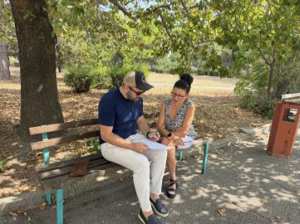
Most of the questionnaire responses were collected at the City Museum of Peja, providing an opportunity to engage directly with respondents in a relevant cultural heritage setting.
What was achieved?
The STSM resulted in the successful development and implementation of a multilingual questionnaire specifically adapted to the Peja region.
A structured empirical dataset containing 158 valid responses was established. The collected information provides a valuable basis for examining perceptions of cultural heritage and sustainable tourism and for identifying the main challenges, opportunities, and expectations of respondents.
The mission also provided direct insight into the local tourism environment and the relationship between cultural heritage, natural resources, communities, and tourism development.
Importantly, the collected data represent the empirical basis for the next stage of the research. Detailed quantitative and qualitative analysis will be conducted as a follow-up activity.
Contribution to SMART-RURAL
The STSM contributes to the objectives of COST Action CA24170 – SMART-RURAL by generating empirical evidence relevant to sustainable rural and regional tourism development.
The collected information can contribute to a better understanding of how cultural heritage, local resources, community participation, and stakeholder engagement can be incorporated into sustainable tourism planning.
The research may also help identify cultural practices and heritage sites with potential for sustainable tourism development and provide insights into the role of local authorities and communities in their preservation and promotion.
Through this STSM, field-based knowledge and empirical evidence from Peja can contribute to the broader exchange of knowledge and collaborative research within SMART-RURAL.
What comes next?
The next stage will focus on the systematic cleaning, coding, and analysis of the collected questionnaire data.
Quantitative analysis will be used to identify major patterns and relationships in respondents’ perceptions, while qualitative analysis will examine open-ended responses to identify recurring challenges, opportunities, and recommendations.
Based on the results, a peer-reviewed scientific manuscript will be prepared focusing on the role of cultural heritage in sustainable tourism development in the Peja region.
The findings are also planned to be presented at relevant national and international scientific conferences and disseminated through COST Action CA24170 activities.
The STSM is expected to provide a foundation for further collaboration with the host institution and other SMART-RURAL partners in the areas of sustainable tourism, cultural heritage valorization, community engagement, and evidence-based tourism planning.
A successful step towards future collaboration
The STSM in Peja provided an opportunity to combine field research with scientific exchange and collaboration. The mission established an empirical basis for further research while strengthening cooperation between the participating researchers and institutions.
The collected data and experience gained during the STSM will support the development of future scientific outputs and collaborative activities within COST Action CA24170 – SMART-RURAL.