Dr. Fatjon Cela, Short-Term Scientific Mission (26 April 2026 – 02 May 2026)

Date:

Share post:

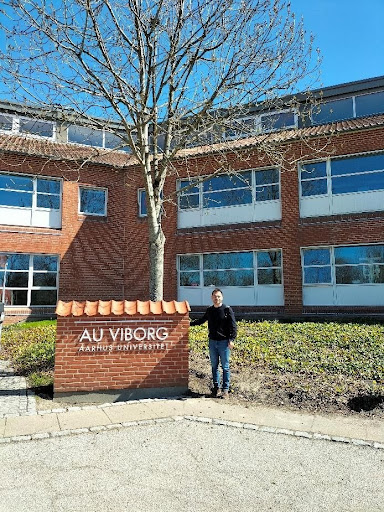
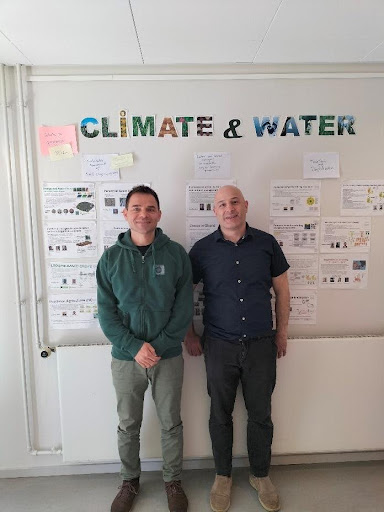
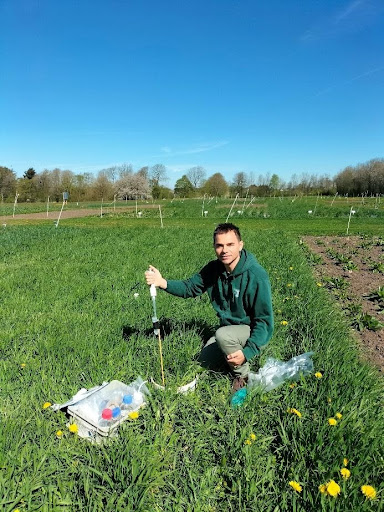
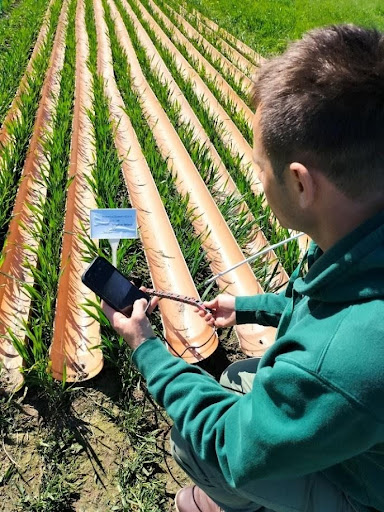
We are pleased to highlight the experience of Dr. Fatjon Cela (Department of Agriculture, Food and Environment, University of Pisa, Italy), who completed a Short-Term Scientific Mission titled “Use of Sensors in Precision Agriculture for Row Crops in Agricultural Fields” at the Department of Agroecology, Aarhus University, Denmark.

During his STSM, Fatjon gets insights into a wide range of advanced technologies for open-field agricultural systems, such as isotope-based estimation of carbon phyllodeposition and rhizodeposition and remote sensing techniques combined with spatial analysis and GIS tools.

The scientific mission deepened his understanding of nitrogen and pesticide losses from cropping systems, meteorological and spatial data collection, and both data-driven and process-based modelling of cropping systems under current and future climate scenarios.

This STSM represented a very important opportunity to enhance scientific networking, develop interdisciplinary research skills, and strengthen international cooperation within the framework of the SMART-RURAL COST Action.
Keep In Touch

Join our newsletter for the latest project news and collaboration opportunities.

Related articles

Supporting the SMART-RURAL Scientific Communication

Damian Gornik (Communications Officer, Centre for Applied Bioscience Research (CABR)) recently participated in a Short-Term Scientific Mission (STSM)...

Beyond Digitalisation: From Industrial Districts to Innovation Ecosystems – BuildingLong-Term Collaboration for Smart Rural Development

Prepared by: Mr Ilija Mugosa, Center for Finance Between 10 and 18 June 2026, I had the opportunity to...

Beyond Efficiency: Power, Access and Resilience in Smart Rural Logistics

This SMART-RURAL STSM at UiT The Arctic University of Norway explored how digital coordination in rural logistics can reshape not only efficiency and access, but also power and dependence between actors. Through a systematic evidence review and conceptual analysis of 80 publications, the mission examined who controls critical access points such as platforms, payment systems, data interfaces and allocation mechanisms, and whether affected actors have realistic alternatives or safeguards. The findings highlight that resilient rural digitalisation depends not only on improved performance, but also on usable alternatives, appropriate infrastructure, transparent rules and enforceable governance protections.

Resilience Frameworks and Near Neighbour Countries: Findings from a SMART-RURAL STSM in Moldova and Romania

This SMART-RURAL STSM in Moldova and Romania explored rural resilience from a Near Neighbour Country perspective, examining technology adoption and existing resilience assessment frameworks. The work highlighted key gaps around institutional integration, traditional knowledge, multi-level assessment and the realities of post-socialist rural contexts, helping shape the development of more context-sensitive resilience indicators for SMART-RURAL.