
Short-Term Scientific Mission | UiT The Arctic University of Norway, Narvik | 1-9 August 2026
From 1 to 9 August 2026, I carried out a Short-Term Scientific Mission (STSM) hosted by Prof. Hao Yu at UiT The Arctic University of Norway in Narvik. The mission, “Socio-Technical Power Dynamics in Smart Rural Logistics: A Bibliometric and Conceptual Framework Analysis,” was supported through COST Action CA24170 – Building resilient rural communities through synergy of traditional knowledge and technological innovation (SMART-RURAL).
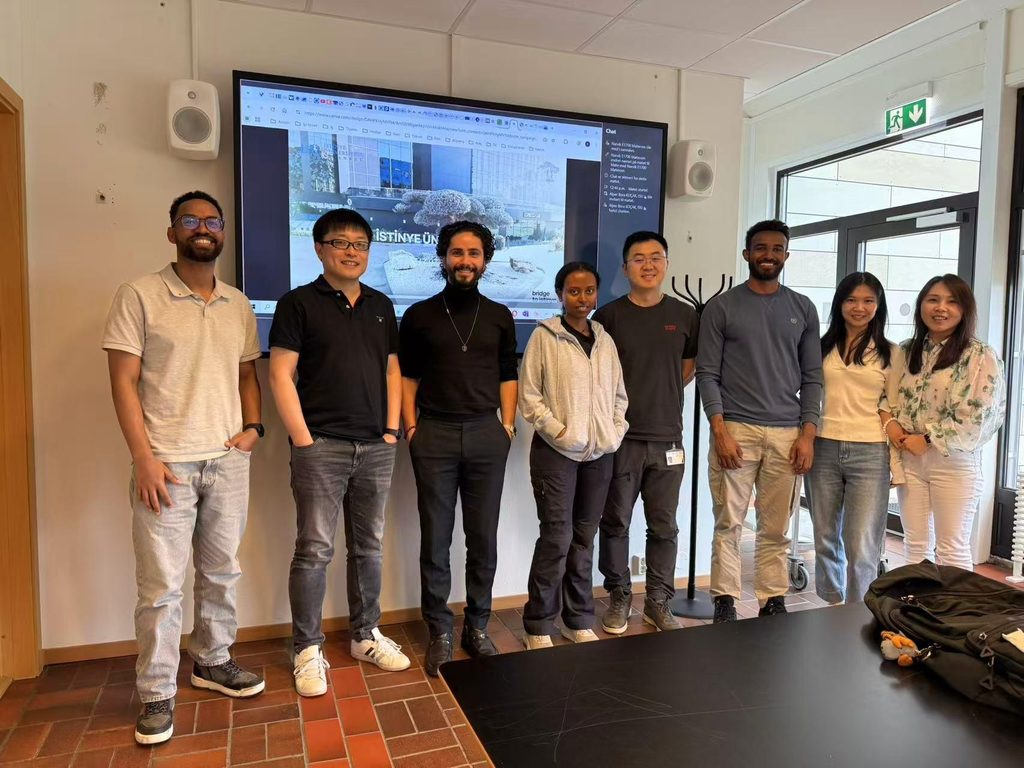
Research discussion with UiT colleagues during the STSM in Narvik, August 2026.
Why look beyond efficiency?
Smart logistics technologies are often assessed through faster delivery, lower cost, better routing, stronger connectivity or wider service reach. These benefits matter, especially where distance, thin markets and infrastructure constraints make rural access difficult. Yet a technology can improve system performance while also changing who controls the route through which farmers, small firms, service users or local organisations obtain something they need.
This motivated the central question of the STSM: when digital coordination reorganises rural logistics and service access, how does it also reorganise dependence among actors? A platform may bypass one intermediary while creating reliance on a payment provider; a digital allocation system may improve coordination while centralising eligibility or prioritisation. The issue is therefore not whether digitalisation is simply ‘good’ or ‘bad’, but which access functions become dependent on which actors, and what practical alternatives or safeguards remain.
What we did
The mission combined systematic evidence review, bibliometric orientation and full-text conceptual analysis. Search strategies were refined in Scopus and Web of Science and followed by PRISMA-guided screening, creating a transparent 644-record title/abstract-retained research universe. A prospectively bounded purposive/theoretical full-text portfolio was then used for intensive theory building and complemented by one bounded round of backward and forward citation snowballing. The final analytical corpus contains 80 publications.
Bibliometrix/Biblioshiny was used to describe the corpus by publication year, source, document type and author-keyword structure. The keyword networks were too sparse and unstable to justify strong theoretical claims from science maps. Rather than force an interpretation, the bibliometric layer was retained as descriptive orientation, while theory development was grounded in page-traceable full-text evidence.
The coding examined actors, technologies, control points, power and dependence mechanisms, logistics or service-access functions, governance arrangements, actor-specific outcomes and negative or boundary cases. This allowed us to separate technology presence from relational control and system-level performance from actor-level agency.
What we learned
First, digital technology does not create organisational power simply by being present. Power becomes relevant when an identifiable actor controls a consequential point in the path through which another actor accesses a valued resource or service – for example a platform rule, payment layer, data interface, standard, allocation algorithm or infrastructure node.
Second, removing one bottleneck does not necessarily remove dependence. A new digital route may substitute for an old intermediary, add a new layer of dependence, or only partially displace an earlier constraint. Resilience therefore requires tracing where dependence moves, not only whether access expands.
Third, alternatives matter only when they are usable in practice. A nominal digital option may offer little real choice if roads, cold-chain capacity, payment infrastructure, finance, provider redundancy or local organisational capability are missing. Rural and peripheral settings make these constraints especially visible, although the project does not assume that all rural areas are alike.
Fourth, participation and transparency should not automatically be treated as redistributed power. Countervailing capacity is stronger when actors possess enforceable rights over decisions, data, portability, exit, review, redress or override, and when credible alternatives exist.
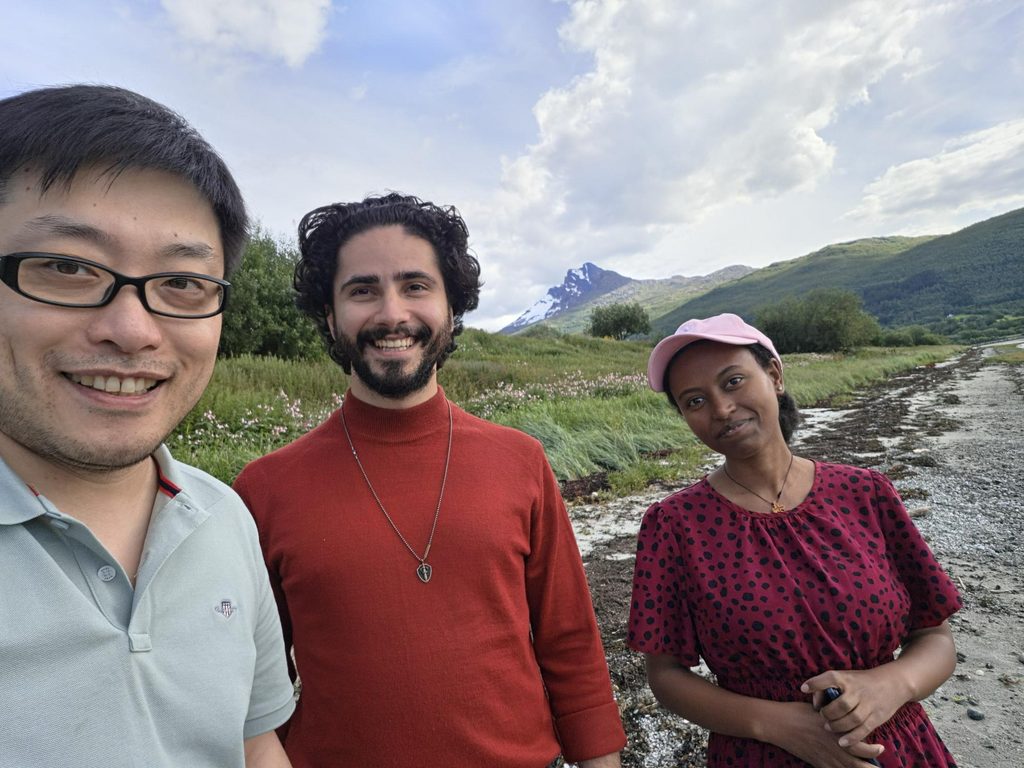
An informal research-networking moment in the Narvik region during the STSM. The place-based setting provided a useful backdrop for discussions of infrastructure, accessibility and peripheral logistics.
Contribution to SMART-RURAL
This STSM contributes most directly to three parts of SMART-RURAL. For WG2, Technological Innovation for Rural Development, it provides a way to evaluate digital logistics innovations not only through technical performance but also through access, dependence and governance. For WG3, Integrated Resilience Assessment and Monitoring, it adds relational questions to resilience assessment: who controls a critical access function, how substitutable is that path, and what counter-options do affected actors have? For WG4, Knowledge Dissemination and Capacity Building, the mission created a reusable and auditable evidence architecture while strengthening collaboration between Türkiye and Norway.
The practical implication is simple: rural digitalisation is more likely to support resilience and inclusion when efficiency gains are accompanied by usable alternatives, appropriate infrastructure, transparent allocation rules and enforceable governance safeguards.
From STSM to publication
The STSM was designed to create a strong research foundation rather than force a journal paper into the nine-day visit. After the mission, the evidence registers were reconciled, the conceptual contribution was sharpened around Resource Dependence Theory, and the manuscript was developed through further collaboration. On 27 August 2026, the resulting co-authored Review Article, “Who Controls Access? How Digital Coordination Reconfigures Organizational Dependence in Rural Logistics,” was submitted to the Journal of Management Studies.
This submission is a follow-up output of the STSM, not a result claimed as completed during the visit. The collaboration will continue through the peer-review process, dissemination within SMART-RURAL and future empirical work testing the proposed mechanisms across rural and peripheral contexts with different levels of infrastructure redundancy, substitutability and governance protection.

STSM collaboration in the coastal landscape of the Narvik region, August 2026.
Acknowledgement
This STSM was carried out within COST Action CA24170, Building resilient rural communities through synergy of traditional knowledge and technological innovation (SMART-RURAL), supported by COST (European Cooperation in Science and Technology).