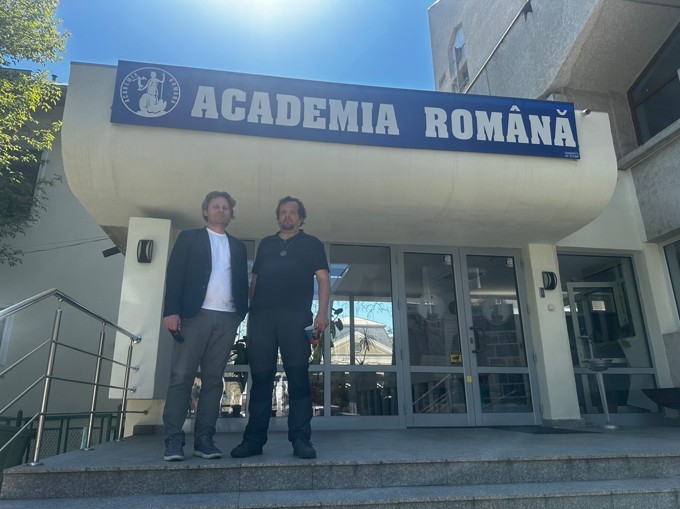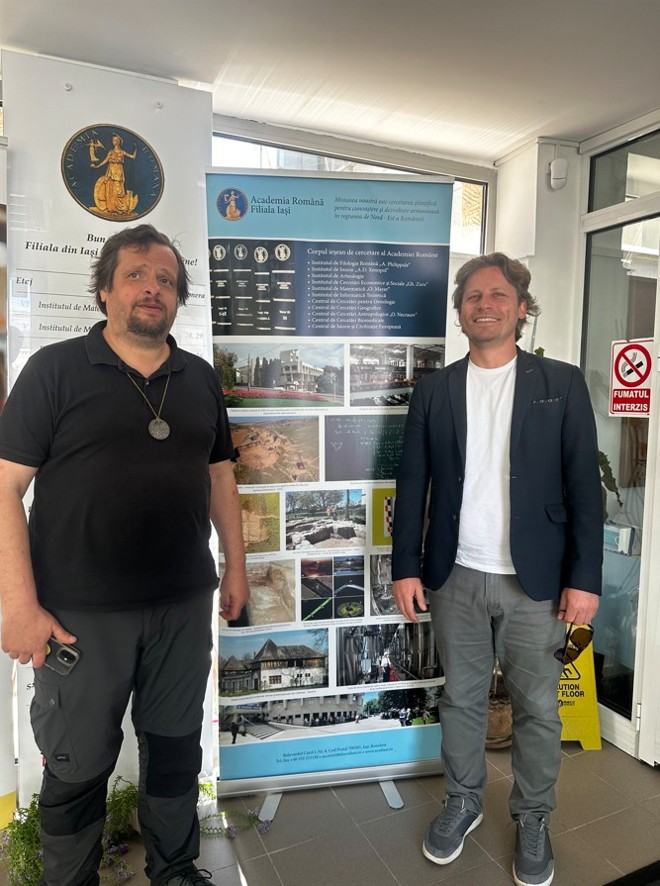

I collaborated with the team at the Romanian Academy – Iași Branch (ARFI) to create the first SMART-RURAL contributions from a Near Neighbor Country perspective.The visit was productive. It also raised an issue that I believe WG3 should address before moving forward with D3.2.
What we set out to do
The STSM produced two concrete results: a Moldova Country Profile for D2.1 (WG2), which maps technology adoption across precision agriculture, IoT, renewable energy, and digital connectivity; and a contribution to D3.1 (WG3), which evaluated eighteen existing resilience assessment frameworks using a nine-dimensional rubric.
The Moldovan side went largely as expected. Working with ARFI’s North-East Romania datasets from the SURE-Farm and SHERPA projects provided a robust comparable baseline. The major finding, which we call the Institutional Integration Hypothesis, is that the difference between rural Moldova and structurally comparable EU regions isn’t primarily due to infrastructure or investment. It is concerned whether multi-actor intermediaries exist to connect the IT and agricultural sectors. Moldova is one of Europe’s most productive IT economies, as measured by GDP share. It lacks the organizational connective tissue to achieve such capacity anywhere near a smallholder farm.
The framework problem
The D3.1 work is where things got more uncomfortable.
We reviewed eighteen frameworks across six categories and discovered five structural flaws that appear in virtually all of them. The one that matters the most to our network is that none of the frameworks studied operate coherently at the farm, community, and territory scales simultaneously. Most are built for one level and then clumsily expanded to include others.
The second problem, which SMART-RURAL was expressly designed to overcome, is that traditional knowledge is not included as an operationalized dimension in these frameworks. There are no obvious indications for this.
The final discovery, however, surprised me: Eastern and post-socialist European contexts are consistently omitted from the design assumptions of practically every framework studied. The structural characteristics that define rural Moldova (severe smallholder fragmentation, low trust in formal cooperative institutions, significant reliance on informal knowledge networks, and subsistence reserves as a key resilience strategy) simply do not emerge in the framework logic. The SURE-Farm Romania case studies provide the most meaningful counterbalance to this pattern, but they are the exception rather than the rule.
In practice, this means that adopting any of these theories to a NNC setting without significant change risks misclassifying the resilience mechanisms that are relevant there. Subsistence is understood as poverty rather than strategy. Informal networks are invisible because they do not produce registry data. Traditional knowledge does not register since there is no indicator slot for it.
The working hypothesis for D3.2
The ARFI collaboration suggested a working hypothesis to test during the D3.2 development phase: the institutional gradient between a NNC like Moldova and a structurally comparable EU region like North-East Romania could be the most analytically productive axis for calibrating context-sensitive resilience indicators. The differences are distinct enough to be diagnostic, while the similarities are significant enough to make comparisons worthwhile.
We have agreed to continue our work through the D3.2 phase, with the ARFI team serving as the major Romanian case study partner. A collaborative paper on technology adoption hurdles in NNC rural environments is also being prepared.
If you’re developing indicators for D3.2, please consider NNC data restrictions from the start. What cannot be quantified in low-data circumstances should not be ignored; rather, it should affect the indicator’s design.