Prepared by Nina Perunovic, PhD candidate, Center for Finance (Montenegro)
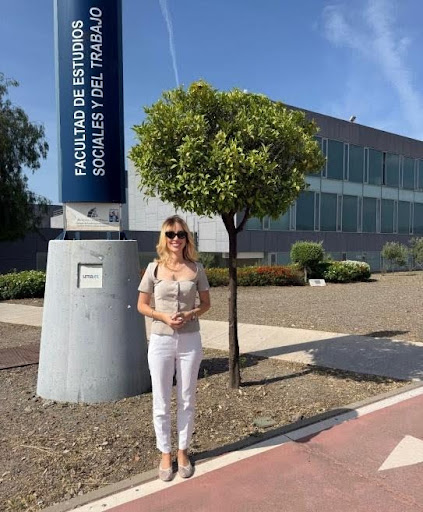
I had the opportunity to participate in a Short-Term Scientific Mission (STSM) entitled “Digital Financial Infrastructures for Sustainable Development: FinTech, Inclusive Finance and Rural Innovation”, which took place from 10–18 June 2026 at University of Málaga in Malaga, Spain.The mission brought together researchers from Spain and Montenegro working within the SMART RURAL COST Action (CA24170) to explore innovative approaches to rural transformation. Throughout the mission, we focused on strengthening interdisciplinary collaboration and advancing research on how digital finance, innovation ecosystems, and place-based development can contribute to building more resilient, inclusive, and sustainable rural communities.
A key highlight was the opportunity to collaborate with researchers from the University of Málaga and the University of Jaén. Discussions with Prof. Juan Carlos Rodríguez Cohard, PhD explored the relevance of industrial district theory, regional development, and local production systems for Smart Rural development. Particular attention was given to the role of rural SMEs, agro-industrial clusters, and innovation networks in enhancing the competitiveness of rural and semi-rural territories through digitalisation. Meetings with Ana Laura López Carlassare, PhD from the University of Málaga focused on the social dimension of rural transformation. The exchange addressed labour market changes, youth outmigration, community resilience, and the opportunities created by digital and green transitions to generate new employment and strengthen rural communities.
Advancing Working Group 2 Outputs Through International Collaboration
The STSM also made a substantial contribution to the work of Working Group 2 – Technological Innovation for Rural Development, directly supporting the development of two key chapters of the COST Action’s forthcoming publication. This contribution is particularly valuable as I serve as Co-Leader of Chapter 2, “Enabling Technologies for Rural Transformation” allowing the knowledge and evidence generated during the mission to be directly integrated into the chapter’s conceptual development and drafting process. The discussions held during the STSM enriched the analytical framework by incorporating comparative perspectives on digital transformation, place-based innovation, regional ecosystems, and institutional cooperation, all of which are central to understanding how enabling technologies can support Smart Rural development, necessary for drafting subchapter where partners are currently drafting the subchapters “Financing and Business Models”.
This subchapter examines how digital finance, embedded financial services, and ecosystem-based business models are reshaping rural development by widening access to capital, lowering transaction costs, and supporting entrepreneurship. Evidence shows that digital finance can promote rural revitalization through technological innovation, entrepreneurial activity, improved market access, and human-capital accumulation. New rural financing models increasingly rely on alternative data, AI-based risk assessment, platform intermediation, and supply-chain integration, which help overcome collateral constraints and geographic exclusion faced by small farmers and rural enterprises. The literature also shows that flexible models such as crowdfunding, venture building, supply-chain finance, and blended or revenue-sharing instruments can better align financing with innovation, sustainability, and the operational realities of rural enterprises.
In parallel, the collaboration advanced work on Chapter 6, “Rural Economies, Platforms, and Work,” and “Financial Vulnerability.” The exchange of experiences between Montenegro and Spain provided valuable insights into rural entrepreneurship, financing mechanisms, local production systems, and the economic resilience of rural communities. These comparative findings are helping to strengthen the evidence base for both subchapters by highlighting how different governance models, funding approaches, and innovation ecosystems influence the sustainability and competitiveness of rural economies.
This subchapter addresses how financial vulnerability in rural areas arises from exclusion from formal banking, weak collateral positions, income volatility, limited financial literacy, and exposure to shocks such as market instability and climate risk. Rural households and small enterprises remain vulnerable where traditional finance underserves low-income populations and where high transaction costs, information asymmetries, and weak infrastructure restrict access to savings, credit, and insurance. Evidence also indicates that resilience improves when rural actors gain access to inclusive and technology-enabled finance, especially when credit is combined with financial education, risk management, social networks, and targeted support for women and other vulnerable groups. Comparative research therefore frames vulnerability not only as lack of income, but as a structural condition shaped by governance, capability gaps, and uneven access to supportive ecosystems.
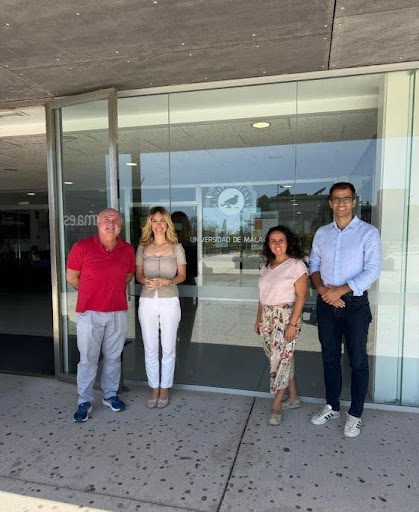
Collectively, these contributions reinforce the scientific outputs of the COST Action while ensuring that ongoing chapter development is informed by practical experience, international collaboration, and comparative research.
Bridging Regional Perspectives: Montenegro–Spain Comparative Analysis for Policy Development
One of the most valuable outcomes of the mission was the opportunity to undertake a comparative analysis of Montenegro and Spain, with a particular focus on the Andalusia region. Bringing together different regional perspectives enabled an exchange of knowledge on how territories with distinct socio-economic contexts address common development challenges. The analysis explored key aspects of regional development, including employment structures, innovation ecosystems, governance models, and policy frameworks that support sustainable and inclusive growth. While the two countries differ in scale and institutional context, the comparison revealed several shared challenges, such as demographic change, labour market transformation, and the need to strengthen regional innovation capacities. At the same time, the exchange highlighted examples of good practice and identified opportunities for mutual learning that can inform future policy design. These insights will contribute directly to the preparation of a joint policy brief within the COST Action, providing evidence-based recommendations for strengthening regional resilience, innovation, and sustainable development across Europe. This collaborative work demonstrates the added value of the COST network in fostering international knowledge exchange and transforming comparative research into practical policy solutions.
Developing a Joint Peer-Reviewed Article on Rural Development and Innovation
Beyond strengthening institutional cooperation, the STSM also generated important scientific outcomes that will extend the impact of the collaboration beyond the duration of the mission. Researchers agreed to jointly prepare a peer-reviewed journal article exploring the interaction between industrial district theory, regional development dynamics, and rural innovation networks in supporting Smart Rural transformation. Adopting a place-based perspective, the study will examine how local production systems, collaborative governance, and institutional cooperation contribute to territorial resilience, innovation, and sustainable rural development. By bringing together expertise from different national and regional contexts, the planned publication aims to provide new insights into how rural areas can capitalize on local assets, strengthen innovation ecosystems, and design more effective policies for long-term sustainable growth. The article will also contribute to the broader objectives of the COST Action by advancing evidence-based research on regional development and informing future policy discussions at both national and European levels.
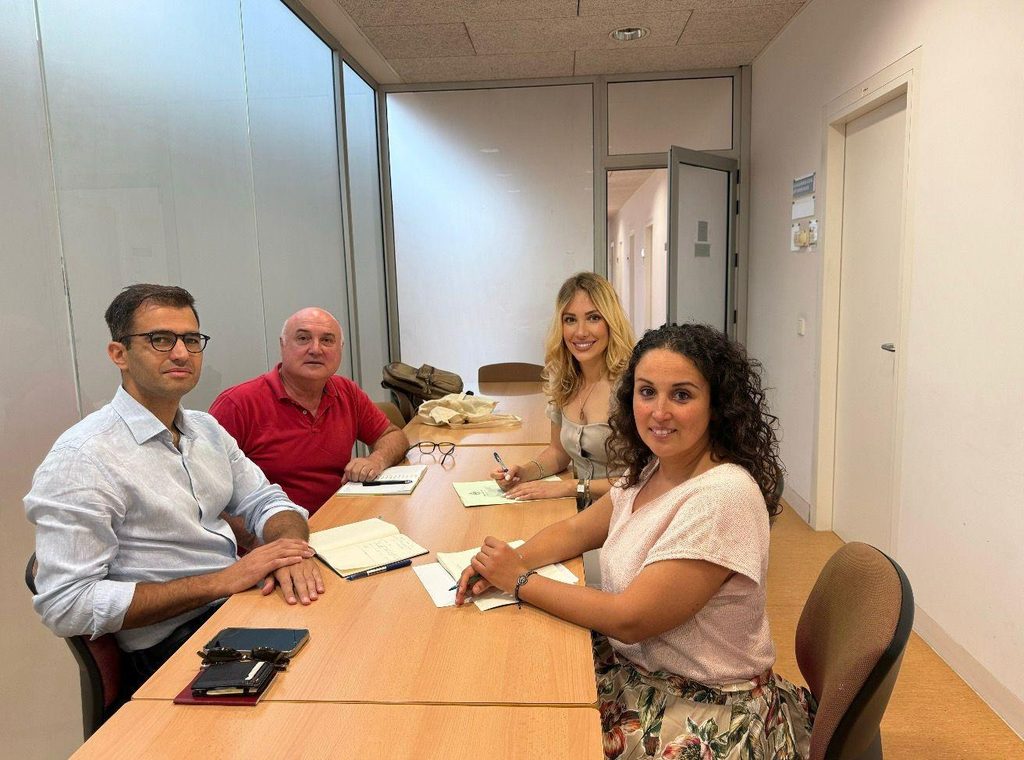
Enhancing Early-Career Researcher Development Through STSM Collaboration
Beyond its scientific outcomes, the STSM provided a valuable opportunity for the professional development of the young researchers participating in the Action by strengthening their international research networks, fostering interdisciplinary knowledge exchange, and enhancing their collaborative skills. The mission also promoted closer cooperation across Working Groups, bringing together participants from Montenegro, actively involved in Working Groups 2 and 4, and researchers from Spain, members of Working Group 3. This cross-Working Group collaboration encouraged the integration of complementary expertise and perspectives, reinforcing the interdisciplinary nature of the SMART RURAL COST Action and creating a strong foundation for future joint research initiatives and long-term partnerships. The knowledge, experience, and networks developed through the exchange will continue to support the Action’s objective of advancing innovative, inclusive, and sustainable pathways for rural development across Europe.
Selected references:
Xu, Q., Zhong, M., & Dong, Y. (2024). Digital finance and rural revitalization: Empirical test and mechanism discussion. Technological Forecasting and Social Change. https://doi.org/10.1016/j.techfore.2024.123248
Chen, R. (2025). Digital Financial Inclusion Catalyzing College Students Starting Businesses in Rural Hometowns: Models and Solutions. Humanities and Social Sciences. https://doi.org/10.11648/j.hss.20251302.18
He, S. (2025). Digital Economy Transformation and Sustainable Development of Agricultural Enterprises: A Study on Supply Chain Finance Innovation and Environmental Governance in Rural Areas. Research on World Agricultural Economy. https://doi.org/10.36956/rwae.v6i3.1684
Iqbal, M., Ahmed, M., Khoso, F. H., & Zahid, H. (2025). Microfinance as a Catalyst for Poverty Reduction: Assessing Credit Access, Entrepreneurship, and Income Resilience in Marginalized Rural Economies. Review Journal of Social Psychology & Social Works. https://doi.org/10.71145/rjsp.v3i2.193
Jubanova, B., Isakov, J., Bauetdinov, M., Shaniyazova, Z., & Kamiljanov, B. (2024). A Comparative Analysis of Financing Methodologies for Innovative Business Projects Within Digital Ecosystems. 270-280. https://doi.org/10.1007/978-3-031-60997-8_25
Ji, X., Wang, K., Xu, H., & Li, M. (2021). Has Digital Financial Inclusion Narrowed the Urban-Rural Income Gap: The Role of Entrepreneurship in China. Sustainability. https://doi.org/10.3390/su13158292
Kitole, F., & Genda, E. (2024). Empowering her drive: Unveiling the resilience and triumphs of women entrepreneurs in rural landscapes. Women’s Studies International Forum. https://doi.org/10.1016/j.wsif.2024.102912
Korobeynikov, D., Korabelnikov, I., & Telekabel, V. (2025). Promising Fintech Innovations for Digital Ecosystems of Agribusiness. Regionalnaya ekonomika. Yug Rossii. https://doi.org/10.15688/re.volsu.2025.1.9
Kong, S. T., & Loubere, N. (2021). Digitally Down to the Countryside: Fintech and Rural Development in China. The Journal of Development Studies, 57, 1739 – 1754. https://doi.org/10.1080/00220388.2021.1919631
Lestari, S., Muksalmina, M., Baiti, B., Hasan, S. H., & Si, S. (2026). Analysis of Financial Education, Risk Management, and Accessibility of Technology-Based Loans on Improving Village Economic Resilience. Grimsa Journal of Business and Economics Studies. https://doi.org/10.61975/gjbes.v3i1.108
Obasuyi, K. O., & Nwanya, J. C. (2025). Strategic Financial Interventions for Small Business Sustainability in Economically Disadvantaged Communities. International Journal of Scientific Research and Modern Technology. https://doi.org/10.38124/ijsrmt.v4i4.475
Otunba, M., Adenuga, A. A., Sikiru, A. O., & Gaffar, O. (2025). Designing Capital-Raising Frameworks for Agro Enterprises in Underserved and Volatile Economies. Engineering and Technology Journal. https://doi.org/10.47191/etj/v10i08.41